.png)
A Mother's Prayer Went Unanswered: How U.S. Aid Cuts Are Killing Women and Babies in Nepal
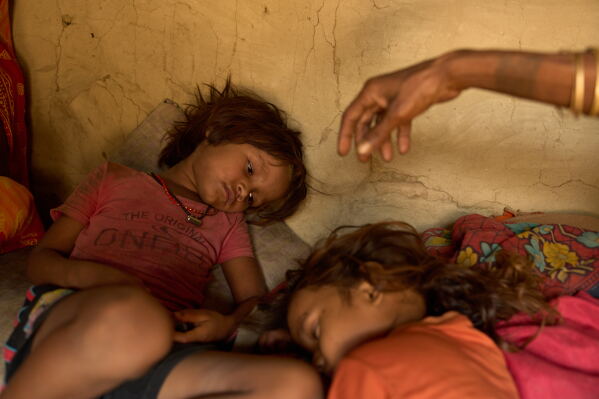
When a pregnant young mother in rural Nepal began suffering through weeks of swelling, pain, and exhaustion, no one came to her door to tell her she was in danger. The community health workers who once walked through her village, checked on expectant mothers, and explained the warning signs of life-threatening complications were gone — their program eliminated after the United States cut its foreign aid funding. By the time Kabita Mukhiya reached a hospital, her baby was already dead, and she would not survive the night.
Her story is not an isolated tragedy. It is part of a widening human crisis unfolding in some of the world's most vulnerable communities, where the withdrawal of relatively modest amounts of U.S. foreign aid has removed the thin safety net that stood between mothers, babies, and death.
A World Moving Backward on Child Survival
For most of this century, the world has made steady, remarkable progress in reducing the number of children who die before their fifth birthday. That progress is now at risk of reversing. The Gates Foundation has predicted that 2025 will be the first year since 2000 in which global child deaths actually increase — a grim milestone driven largely by cuts to foreign aid programs that provided basic health services to families living in poverty.
The Trump administration's decision to dismantle the United States Agency for International Development, once the largest humanitarian donor in the world, sent shockwaves through health systems in dozens of countries. Maternal and newborn care programs were gutted. Nutrition support for pregnant women and young children was eliminated. Birthing centers were left without supplies, medicine, and trained staff. According to the World Health Organization, the U.S. cuts — followed by additional reductions from other countries — forced 60% of women's health organizations worldwide to scale back their services.
A study published in the medical journal The Lancet warned that the U.S. aid cuts could result in more than 14 million deaths by 2030, including more than 4.5 million children under the age of five.
"It's heartbreaking to see what's happening. It's decades of progress being washed away," said Rajat Khosla, executive director of WHO's Partnership for Maternal, Newborn and Child Health.
The U.S. State Department, responding to the Associated Press, said the Trump administration had refocused its assistance programs on efficiency and effectiveness, and that the U.S. continues to spend more on health and humanitarian assistance than any other nation. "The rest of the world needs to contribute more and share the burden," the department said. The department also said the U.S. still supports programs in Nepal aimed at improving maternal and child health.
But health workers, government officials, aid organizations, and grieving families on the ground in Nepal say the human cost is already visible and growing.
"The number of deaths of mothers, young mothers, during delivery has really increased," said Mona Sherpa, country director for the aid group CARE Nepal, which lost more than half its funding due to the U.S. cuts. "The expected number within a year is happening within four to six months."
What a $35 Million Program Actually Did
To understand what was lost, it helps to understand what these programs actually looked like on the ground. In Nepal, a five-year, $35 million initiative — canceled when the funding was cut — had reached more than 100,000 women and girls in its first three years alone. The program trained nurses, midwives, and community health volunteers who made regular home visits to pregnant women in rural villages. These volunteers checked for danger signs, explained what symptoms required urgent medical attention, and often personally accompanied women to prenatal appointments.
The interventions themselves were inexpensive. Packets of fortified peanut paste costing less than a dollar can pull a severely malnourished child back from the brink of death within weeks. Clean birth kits costing just a few dollars can dramatically reduce the risk of fatal infections for mothers and newborns. These are not luxury programs. They are basic, proven tools for keeping the most vulnerable people alive.
When the program was canceled, women like Kabita were left to navigate an unfamiliar and often frightening medical system without guidance, without nutritional support, and without anyone to alert them when something was wrong.
At a birthing center in Rautahat's municipality of Dewahi Gonahi — one of the poorest and least-literate districts in Nepal — the number of women coming in for prenatal checkups dropped by half after the funding cuts, according to Kishori Shah, the officer in charge. Fewer checkups meant fewer opportunities to catch complications before they became emergencies.
"There would have been a decrease in complications if the USAID program was still running," Shah said.
In the nearby village of Prempur Gonahi, the effects were measurable and swift. Before CARE's program launched there in December 2022, the village saw between 10 and 15 newborn deaths every year. By 2024, records showed that number had fallen to zero. But after the program was canceled, babies began dying again. The first death came in December. Four more followed by March.
Kabita's Story: A Life That Didn't Have to End
Kabita Mukhiya was 20 years old, a mother of three young children, and seven months pregnant when she died. She had already lived a life shaped by hardship — orphaned young, married at 14, raising her children largely alone while her husband chased construction work across Nepal and India for roughly $80 a month.
Despite everything, she was joyful about her fourth pregnancy. She had scraped together money to buy clothes for the baby boy she planned to name Shivraj, and she dreamed that he would one day get the education she never had.
During an earlier pregnancy, she had received U.S.-funded nutritional supplements to help support her limited diet. By this pregnancy, those supplements were gone. Malnutrition data from her province tells the broader story: the rate of severe wasting among children under five — a life-threatening form of malnutrition — rose from 7.4% before the U.S. funding cuts to 12.3% afterward, according to government and United Nations data and a national screening conducted by the aid group Helen Keller Intl.
As Kabita's pregnancy progressed, she grew weaker. Her belly swelled while the rest of her body remained dangerously thin. She sometimes ate only two small meals a day. A nurse who saw her at 16 weeks noticed she was pale and recommended a blood test to check her hemoglobin levels — a measure that can drop dangerously low during pregnancy when nutrition is poor. Kabita didn't get the test. She likely didn't understand why it mattered. She came back at 24 weeks and the nurse was more worried, but again, Kabita didn't follow through.
Under the now-canceled program, community health volunteer Rajkumari Patel would have been visiting Kabita at home and helping bridge exactly that kind of communication gap.
"I would have asked her, 'Is the baby kicking? When did you last feel movement?' I would have checked for swelling in her hands and face. I would have looked at her eyes for signs of anemia," Patel said. "These are the signs I would have noticed in Kabita and said, 'This woman needs a hospital today — not tomorrow.' Maybe we could have saved her life."
Instead, Kabita suffered at home for weeks. By December, at 28 weeks pregnant, she could no longer walk. Her husband was working in India. She turned to her aunt, Shraddha, who brought her to a hospital where neither woman could understand what the doctors were telling them. What they eventually understood was the worst possible news: there was no heartbeat. The baby was gone.
Without the resources to remove the baby at that hospital, staff urged them to go elsewhere. Kabita and Shraddha, not fully grasping the danger, went home instead. The next day, Kabita was delirious. She had suffered a seizure from preeclampsia — a condition caused by dangerously high blood pressure that, if caught early through routine prenatal care, can be managed and treated.
A second hospital rushed to prepare an ICU. It was too late. Kabita died before she could be moved into the room. She died from complications of eclampsia, with severe anemia as a major contributing factor — both conditions that regular prenatal care could have identified and addressed, according to paramedic Hridaya Narayan Mahato.
The Children She Left Behind
Kabita's three young children — Sonam, Anushka, and Yubraj — are now being cared for by their elderly grandmother, Lachhiya Devi, and their great-aunt Shraddha, both in their sixties. Kabita's husband, devastated by grief, has struggled to function, sometimes lying in the dark for days at a time. He works only because the family will otherwise go hungry.
"How will I feed them? I'm old," said Lachhiya, sitting beside her sleeping grandchildren. "You can see how desperately I'm trying to get by."
Shraddha carries the weight of not knowing — of not having had anyone to tell her or Kabita what the warning signs meant, what the test results showed, or how serious the danger had become.
"We don't have anyone to help us out here, to tell us about these things. If there was someone, we would ask them, follow their advice," she said. "It would have saved her life."
Deaths That Are Not Being Counted
One of the most troubling consequences of the aid cuts is that many of the deaths they are causing will never appear in any official record. The cuts eliminated not just health services, but also the workers responsible for tracking and reporting mortality data. In some communities, there is simply no one left to count who has died.
In Dewahi Gonahi, the collapse of mortality reporting means the official government count shows just two infant deaths since the funding cuts. But Shatrudhan Singh, executive director of Campaign Nepal, a partner of CARE, says his organization knows of at least eight.
"There must be more than that," Singh said. "We just can't identify them."
A young woman identified only as Phula Devi — not yet 20, never having attended school — lost her baby to a stillbirth in January after no outreach worker came to explain to her what a slowing fetal heartbeat meant, or why she needed to reach the hospital urgently. Her relatives waited until that evening to bring her in. She didn't understand what a C-section was and, frightened, pushed the baby out on her own. He was born silent. She never held him, never saw his face, never learned his name.
"I think of my baby all the time," she said quietly.
These are the human faces behind a policy decision made thousands of miles away. Each death represents a family fractured, children left without mothers, grandmothers left to raise grandchildren they may not live long enough to see grow up. And each one was, in many cases, preventable — not through expensive technology or complex medicine, but through the kind of basic, low-cost care that foreign aid programs were specifically designed to provide.