.png)
Farm Bankruptcies, Rising Costs Push Rural Voters Away From Trump
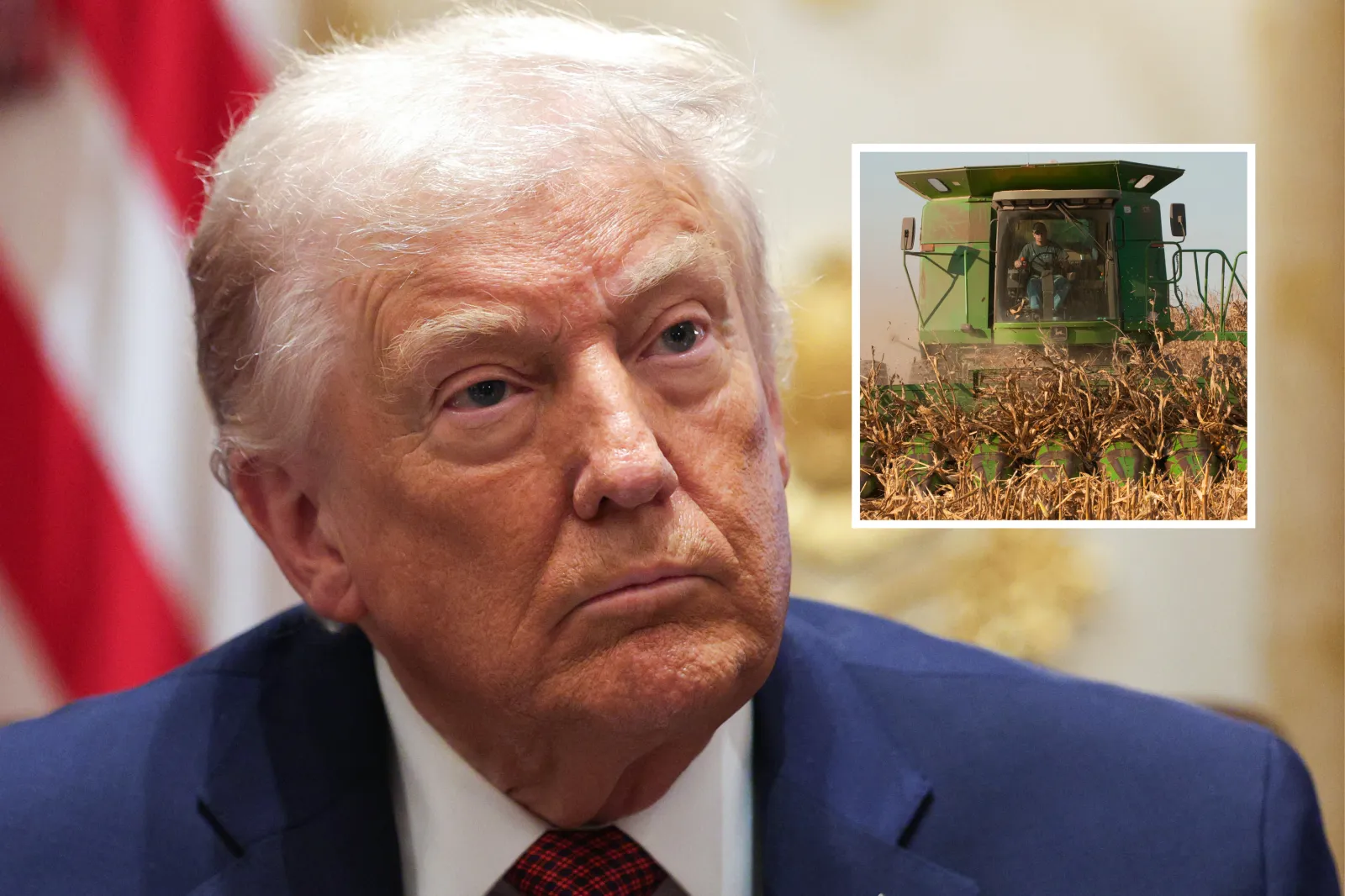
Rural Americans — the voters who have formed the backbone of Donald Trump's political success — are sending a clear signal that their patience is wearing thin. New polling data shows a dramatic shift in how farmers and rural communities view the president, and the reasons behind that shift are rooted firmly in dollars and cents.
A Fox News poll released this week found that Trump's net approval rating among rural voters has swung 34 points in the wrong direction since early 2025 — dropping from +20 to -14. Among rural white voters specifically, the slide is nearly as steep, falling 33 points from +27 to -6. For a politician whose electoral strength has long depended on wide margins in rural counties, those are numbers that carry real weight.
What the Poll Found
The survey was conducted May 15–18 among 1,002 registered voters nationwide. It was jointly run by Beacon Research, a Democratic-aligned firm, and Shaw & Company Research, a Republican-aligned firm. Respondents were reached by landline, cellphone, and text-to-web online surveys, drawn randomly from a national voter file. The margin of error is plus or minus 3 percentage points.
Trump's overall approval rating came in at 39 percent — just one point above the lowest recorded level in this polling series. But the more telling story is what's happening within specific voter groups that have historically been among his most reliable supporters.
On the economy, just 29 percent of all voters said they approve of how Trump is handling it, while 71 percent disapproved. Rural voters tracked nearly identically — 30 percent approval and 70 percent disapproval. On inflation specifically, Trump posted his weakest numbers of any policy area: 24 percent approval nationally, and 28 percent among rural voters.
Even on border security — long one of his strongest issues — Trump's numbers have slipped into net negative territory nationally for the first time this term, with 49 percent approving and 51 percent disapproving. Rural voters still lean in his favor on that issue, at 54 to 45 percent, but the overall trend is one of erosion across the board.
Republican pollster Daron Shaw, who conducts the survey alongside Democratic pollster Chris Anderson, put it plainly.
"Despite consistently strong GOP support, the president's numbers are leaking a bit," Shaw said. "Make no mistake; it's all about affordability. Independents jumped ship in 2025, and now non-MAGA Republicans and other core constituencies are wavering."
Farmers Are Feeling It Most
Behind the polling numbers is a farm economy under serious financial stress. According to the American Farm Bureau Federation, farm bankruptcies rose 46 percent in 2025 compared to the year before — a stark indicator of how badly conditions have deteriorated for agricultural producers across the country.
Those pressures have only grown in 2026. The escalation of conflict involving Iran has pushed fertilizer and diesel prices higher, squeezing the already-thin profit margins that farmers depend on to keep operations running.
Willis Nelson, a Louisiana farmer, described the situation in direct terms when speaking to MS Now.
"We're not financially able" to operate as normal, Nelson said, explaining that his family has had to cut back on fertilizer use because "we just don't have the margin."
Nelson added that the situation has put his multigenerational farm at risk.
"It's tough, you know, very tough on us," he said.
Ohio farmer Fred Yoder offered a similarly grim assessment in comments shared by Farm Action from an interview with US Farm Report. He broke down the daily financial burden in concrete terms.
"It's costing us about $1,500 of cash per day to run two tractors," Yoder said. "I spent many years buying potash for $90 a ton, and now it's $670 to $700 a ton. Our big problem is the input costs. I haven't seen anything this bad since the 1980s."
On top of rising costs at home, trade tensions have reduced demand for American agricultural exports abroad. Chinese purchases of U.S. soybeans — a critical market for American farmers — have declined, leaving producers with weaker prices and fewer reliable buyers.
Adding to the unease, Trump's comments during a recent trip to Beijing raised eyebrows in farm country. He argued against restricting foreign ownership of American farmland, saying such limits would hurt land values — a position that unsettled farmers already concerned about foreign control of agricultural assets.