.png)
While Medicaid Gets Cut, the U.S. Is Helping Fund Iran's Reconstruction
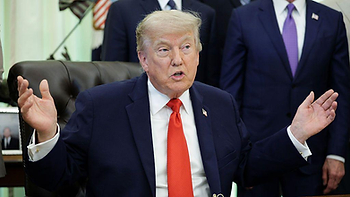
Millions of American families are watching their health coverage shrink, their grocery assistance disappear, and their gas bills climb — all while the federal government finalizes a deal that could send hundreds of billions of dollars toward rebuilding Iran. It's a contrast that is hard to ignore, and for many households already stretched thin, it raises an urgent question: who is this government's budget actually protecting?
On Monday, Vice President JD Vance confirmed the broad outlines of a financial agreement tied to the ceasefire ending the U.S.-launched war against Iran. Speaking to CBS News anchor Ed O'Keefe, Vance said the deal includes access to a $300 billion reconstruction fund for Iran, along with the release of $25 billion in Iranian assets that had been frozen by the United States. Vance described the fund as "funded by the Gulf coast coalition, so long as they honor their end of the obligation." Just days before, he had posted on X that Iran would not be receiving "any cash" under the deal.
The war itself — called Operation Epic Fury — began before dawn on February 28, 2026, when U.S. and Israeli forces launched coordinated strikes across Iran. American forces struck more than 1,700 targets in the first 72 hours. The White House cited Iran's nuclear and ballistic missile capabilities as the initial justification, though Trump's recorded address suggested the broader goal was regime change — a rationale that shifted even as the bombing continued.
A Payment by Any Other Name
When Iran came to the negotiating table, it brought a reparations demand ranging from $300 billion to $1 trillion for damage caused by American bombs. U.S. diplomats chose not to call it reparations. Instead, they rebranded the payment as an "international investment fund" — a framing designed to reduce political backlash at home. The people behind that rebranding were Steve Witkoff, Trump's special envoy to the Middle East, and Jared Kushner, both of whom have backgrounds in real estate development. They proposed joint development projects in Tehran as the commercial rationale for the fund. The formal agreement is scheduled to be signed in Switzerland on June 19.
Regardless of what the fund is called, its purpose is clear: compensating Iran for destruction caused by U.S. military strikes. Whether the money flows through a Gulf-backed financing mechanism or arrives as a direct payment, the outcome for Iran is largely the same — hospitals, roads, and commercial buildings get rebuilt.
What's Happening at Home at the Same Time
For the nearly 75 million Americans enrolled in Medicaid, this moment has a very different texture. Coverage thresholds have been tightened, meaning some people who previously qualified for health insurance through the program no longer do. Certain prescription medications that were once covered are no longer included. Families who relied on food assistance have seen those benefits reduced or eliminated. And at the gas pump, Americans are paying an average of $4.07 a gallon.
These are the everyday financial pressures bearing down on working families — pressures shaped in part by federal spending decisions — at the same moment the administration is arranging a massive reconstruction fund for a country the United States just bombed. The families losing Medicaid coverage or food benefits were not part of any conversation about whether those resources might be directed differently.